Profile
Following your Passion leads to Unexpected Destinations
by Jeffrey Loy
One day several years ago, Ivan Borodin was listening to Chick Hearn's radio show before a National Basketball Association game. Hearn, who was the voice of the Los Angeles Lakers for 40 years, was answering a call from an inarticulate immigrant who dreamed of being a sports announcer.
‘'Chick Hearn handled his question with his typical wisdom," Borodin said while sitting in front of his computer. "Chick explained that he himself had started out trying to be a basketball player, but a series of events led to him becoming the voice of the Lakers."
Chick, who suffered a fatal head injury in 2002, told the caller that he should follow his dream, but keep his eyes open for other jobs. It reminded Borodin of how his career began many years earlier. Borodin auditioned for many films like To Die For, Clueless, and Six Degrees of Separation. He was not selected; the roles in those films went to Joachim Phoenix, Breckin Meyer, and Phillip Seymour, respectively, but he found he had an alternative life-changing gift -- he had the marketable skill of teaching.
"I don't consider it a consolation prize. It's more of an amazing side quest," Borodin said.
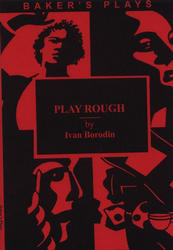
Borodin grew up in New York City and moved to Los Angeles in 1994 to begin his acting career. Borodin co-starred on The District, Alias, and Sabrina and the Teenage Witch. He also published a stage play, Play Rough, which is about an affair between a married woman and a struggling artist, and Speak with an Accent, a compact disk that helps actors learn many foreign and regional dialects.
But teaching is where Borodin spends most of his time. He specializes in "accent reduction" and has taught in many schools in the Los Angeles area like the Los Angeles City College and the Beverly Hills Adult School, which is where I met him. The Los Angeles Times took notice of him because of the impact his classes had on the community. Some of his students ended up in roles in The Sopranos, The Shield, Melrose Place, AI, Star Wars II and III, and other shows and films.
In his home, Borodin started a lesson with me on Skype when we had the chance to talk. I was asking him about how teaching accent reduction came to be his expertise. At the same time, he was listening to me give a play-by-play of a World Series baseball game to him. I dream of being a sports-broadcaster and he told me I needed to double-stress names. This was just one thing that he told me while we were talking from opposite sides of the world.
Borodin first realized the significance of helping people like me in accent reduction when he was going into college. Being from "The Big Apple," Borodin had the thick accent of those from his native Queens, one of the five boroughs of New York City. During the one month break between the Fall and Spring semesters, Borodin decided to sacrifice his time off to reduce his Queen's accent. He met with his coaches daily.
"My classmates were so impressed with my progress, they began hiring me to train them," Borodin said.
But Borodin was eager for more. He went the extra mile to learning everything there was to learn on the subject of speech, dialects, and accents.
"I've studied several languages, including German, Russian, Portuguese, and now as I've mentioned, Mandarin. Every language I venture into teaches me more about American speech, "Borodin said.
And his gift of teaching has brought him to a few new places in the prime of his career. This year, he acted as the dialect coach in the feature film, The Truth About Angels. This film brought him to a beach house in Malibu in Southern California for a couple weeks.
More importantly, it has helped people see what they could not see before.
"The beauty of life lies in its details. As a teacher, you are aware of the intricacies of your subject. Your student starts out blind to them. When you do your job well, the student becomes increasingly aware of those details, which were hidden to him, but clear to you. Good teaching is helping others see as you do," he said.
In November of this year (2008), Borodin will be going to China, a country in great demand of his services, for the first time and will make stops at Shanghai, Beijing, Xian, Guilin, and Hong Kong. Borodin realizes that learning the country's language is key to making friends and getting around.
"Chinese is an amazing, rich language and it is increasingly accessible. There are a ton of classes and books on Mandarin," he said.
And Borodin has been preparing for the challenge. He has been attending classes at the Los Angeles City College and The Beverly Hills Lingual Institute as well as going through many textbooks and audio programs to enhance his studies in this new foreign language.
Looking to make a good first impression, Borodin is one of few Caucasians to say that he has a Chinese name. It is Bó YiFán and he has already printed that onto a business card.
"You never know, I might make a few new friends," Borodin said. "With the advent of Skype, I could be doing a lot of overseas teaching from Los Angeles."
Borodin recently discovered a book with American idiomatic expressions with Chinese characters and he plans to use it if he has to teach it in Beijing. He also sees a big stereotype that it is difficult for a Chinese speaker to lose his accent, but he found this not to be the case.
"I've had great results with Chinese students," he said.
Borodin says that that Mandarin uses four tones while Americans only have two tones. They are what the Chinese call the fourth tone (the one that descends in pitch) and the neutral tone on unstressed syllables, two tones that the Chinese use.
"My point is that when Americans learn Chinese, they have to learn at least three new tones (more if they dare to learn Cantonese), but when a Chinese person learns American English, they only have to learn two tones; two tones they already know!" he said.
Sitting at his desk, Borodin describes his passion. Based on his experience, he thinks people should do what they want and not what their parents tell them they should do.
"By bringing you into the world, your parents have given you permission to follow your dreams. That is a right of birth. It cannot be taken away. But it can be surrendered. I've seen a lot of people dedicate their lives to their parents, and then wonder why they lack passion," he said.
"Look at you, Jeffrey. When you talk to me about college football, about getting up at 6am Hong Kong time to listen to a Missouri game, you speak with real passion. I'm glad you're going into sportscasting. You must have good parents. They seem very supportive of your choice."
He compliments me about my passion, but what does he think about the subject of passion itself?
"I have a theory about passion. Inside each of us is an inner voice. That voice whispers directions to us. If we follow its suggestions, we'll live more complete lives," Borodin said.